



Overview
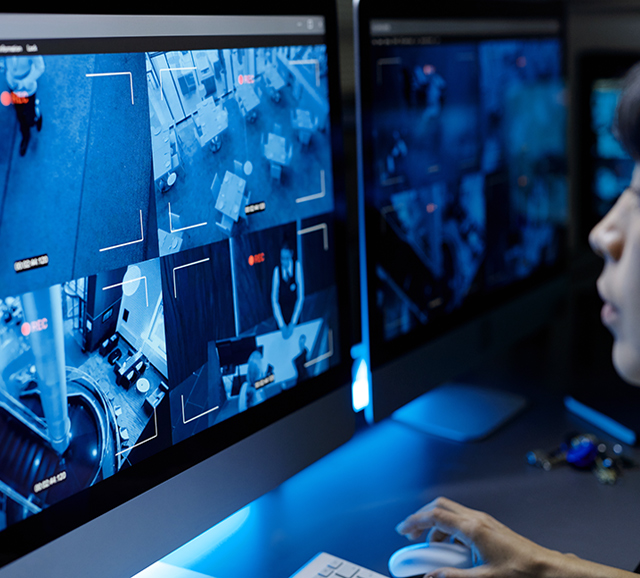
If you are a cannabis dispensary operator in Oregon, California, Washington, or Colorado, your video security surveillance system isn’t just something you install once and hope for the best. It’s how regulators check your compliance, how you investigate shrink, and—when something goes wrong—how you protect your license.
I’m Stephen Arndt, President of Cannabis Technology Partners, and my team spends a lot of time fixing half-baked camera setups that seemed “good enough” until an inspection notice landed. The problem usually isn’t that there aren’t enough cameras. It’s that they’re not in the right places, or they don’t meet your state’s technical requirements, or your retention is quietly deleting footage before regulators are done with it.
This guide walks through:
- Room-by-room dispensary camera placement
- What OR, CA, WA, and CO expect around resolution, retention, and coverage
- Real-world violation patterns—and how to avoid them So you can look at your floor plan and say, “Yes, this will hold up in an inspection.”







Important note on regulations
Cannabis security and video surveillance rules change frequently. This guide is for operational planning and education only—it isn’t legal advice. Before you finalize your camera layout or policies, always confirm the latest requirements with your state regulator and cross-check them against our up-to-date Cannabis Security Compliance by State resource.
Why Cannabis Video Surveillance Matters More Than “Regular Retail”
Cannabis business dispensaries aren’t ordinary retail:
- You handle high-value inventory that’s attractive to both external and internal theft.
- You’re often cash-heavy, even as banking improves.
- You operate in highly regulated environments where a surveillance mistake can trigger fines, suspensions, or even license revocation.
Regulators in Oregon, California, Washington, and Colorado all require:
- Continuous 24/7 recording in key areas
- Coverage of all entry/exit points
- Clear video of cannabis and cash handling
- Retention long enough to support investigations (typically 40–90+ days)
The good news: once your system is designed correctly, it becomes a reliable compliance tool, not a constant source of anxiety.
Room-by-Room Dispensary Camera Placement
Entrance, Reception, and Waiting Area
Goals:
- Capture the face of every person entering and exiting
- Document ID checks and reception interactions
Best practices:
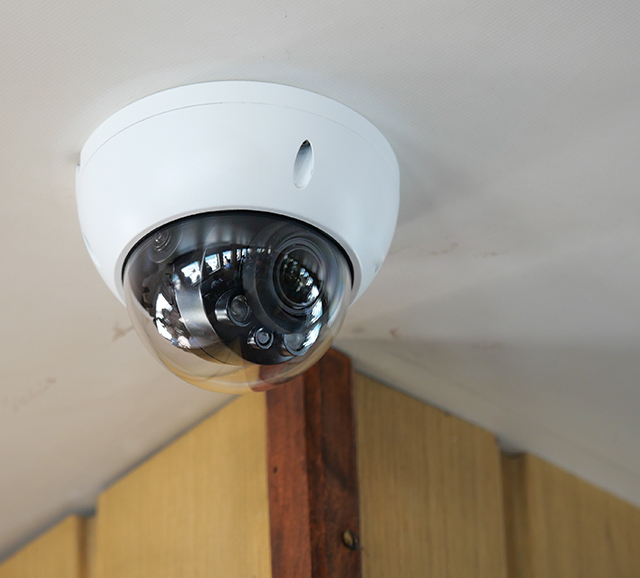
- Camera just inside the main entrance angled to capture faces, not just tops of heads.
- Second camera behind or above the reception desk, aimed outward to capture ID checks.
- Wide-angle camera covering the waiting area and the door into the sales floor.
- All four states expect you to cover points of ingress/egress and consumer sales areas, so this is your front-of-house baseline.
Point-of-Sale (POS): Your Most Scrutinized Security Cameras
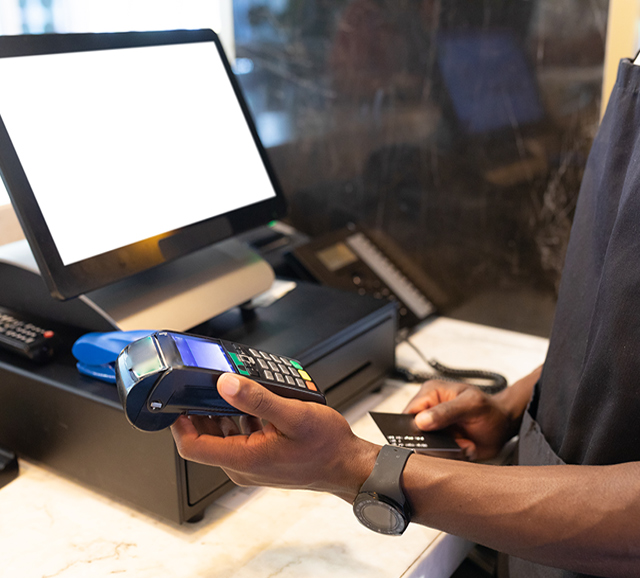
If there’s one area you absolutely cannot get wrong, it’s POS. This is where product and cash actually change hands.
Goals:
- See who sold what to whom, and when
- Capture cash drawer, hands, product, and faces in a single shot
Best practices:
- One camera per register or budtender station.
- Angle each camera so you can clearly see:
- The register and cash drawer
- The budtender’s hands
- The customer’s face and hands
- The product transfer from display to counter
Consider a secondary camera behind the counter, aimed toward customers for better facial identification and people counting.
In inspections, this is often the first footage regulators ask to see.
Sales Floor and Consultation Areas
Goals:
- No blind spots around product displays
- Clear view of budtender–customer interactions
Best practices:
- Fixed cameras with overlapping coverage of foot traffic across all display cases and self-service fixtures.
- Angles that show product handling and not just general movement.
- In consultation rooms, keep focus on product and handoffs, not intrusive close-ups of faces.
If cannabis is present, regulators treat it as a controlled or limited access area and expect coverage, especially for loss prevention.
Inventory and Storage Rooms
Inventory is your most valuable asset—and one of the first places regulators look for surveillance gaps.
Goals:
- Document every movement in and out of storage
- Capture weighing, packing, and repackaging activities
Best practices:
- Overhead cameras with overlapping views so every shelf, bin, and work table is visible.
- Dedicated door camera capturing faces as people enter and exit.
- Extra coverage for scales and packaging stations where product is broken down or repackaged.
Oregon and California explicitly require coverage where marijuana items are weighed, packed, stored, or handled; Colorado and Washington expect storage and limited access areas to be fully observable on video.
Cash Room and Vault
Treat your cash room and vault like a bank.
Goals:
- Capture every safe/vault access
- Document cash counting and bagging
Best practices:
- Camera on the cash room door (and exterior view if door opens to a hallway).
- One or more cameras over the cash counting area, positioned to see denominations and bundling.
- Multiple cameras inside the vault, to cover all walls and storage racks.
In enforcement records across these states, missing or unusable footage in vault/cash areas often shows up alongside other serious violations.
Back Door and Loading Area
This is one of the most common blind spots we see—and one of the most common violation locations.
Goals:
- Capture deliveries and shipments
- Prevent unauthorized exits/entries
Best practices:
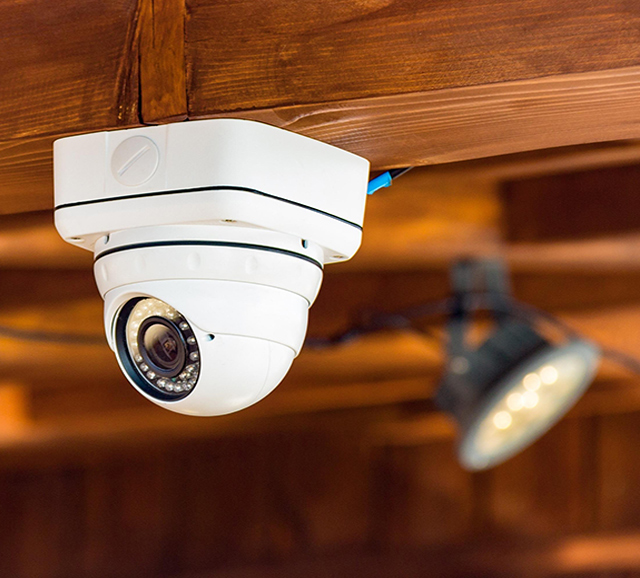
- Exterior camera above or near the back door, capturing faces and vehicles approaching.
- Interior camera facing the door, capturing every person entering or exiting.
- Coverage of the path from back door to storage so there’s no “dark zone” during receiving.
All four states require coverage of all points of ingress/egress; missing a back door is a classic citation.
Waste and Destruction Areas
Waste is a major diversion risk, and regulators know it.
Goals:
- Prove that cannabis waste is rendered unusable and disposed of correctly
- Prevent employees or third parties from pulling product out of trash
Best practices:
- Camera on waste storage containers or locked cages.
- Camera on the rendering/destruction process (e.g., grinding and mixing with other waste).
Oregon and California specifically call out marijuana waste storage and destruction areas. Colorado and Washington expect any area where marijuana is destroyed to be monitored.
State Snapshot: OR, CA, WA, CO Requirements at a Glance
Here’s a simplified look at what each state expects from your cannabis video surveillance system. Always verify current rules, but this is the baseline I design to.
Oregon (OLCC – Retailers)
- Resolution: Minimum 1280×720 (720p)
- Frame rate: ≥10 fps
- Retention: ≥90 days
- Coverage: All entry/exit points, consumer sales areas, limited access areas, surveillance room, and all marijuana waste storage/destruction areas.
California (DCC – Retailers)
- Resolution: Minimum 1280×720 (720p) digital system
- Recording: Continuous 24/7, not just motion
- Retention: ≥90 days
- Coverage: All entrances/exits, POS and retail areas, limited access areas, all cannabis and cash handling locations, and the surveillance equipment room.
Washington (WSLCB – Retailers)
- Resolution: ≥640×470
- Frame rate: ≥10 fps
- Retention: ≥45 days
- Coverage: All entrances and exits (inside and out), POS areas, storage, and any room where cannabis is present.
Colorado (MED – Retailers)
- Recording: Continuous digital recording, 24/7 in limited access and critical areas
- Retention: ≥40 days
- Coverage & clarity: All entrances/exits, areas where marijuana is weighed, packaged, stored, sold, destroyed, vaults/safes, and often exterior/parking; footage must clearly show faces and activities.
Design tip: if you operate in multiple states (or just want to future-proof), build to meet or exceed the strictest of these standards:
- 1080p or better in all critical zones
- 10–15 fps
- 90+ days retention for key cameras
That way, you’re never rebuilding because rules tightened.
How Dispensaries Get Cited (and How You Avoid It)
Looking across enforcement actions and rule summaries in these states, we see the same patterns:
Retention Shortfalls
- Systems only keep 30–60 days of footage where 90 days are required.
- NVRs quietly overwrite old footage before investigations are done.
Coverage Gaps & Blind Spots
- Back doors, inventory corners, cash areas, or waste zones not fully visible.
- Vault shelves or safe areas just out of frame.
System Downtime Not Reported
- Cameras down or NVR offline for days, and the operator doesn’t notify regulators.
Bad Resolution / Angles
- Cameras below required resolution, or mounted so high you can’t identify faces.
Unsecured Surveillance System
- Surveillance room/closet not locked, no access control or logs, potential tampering.
The cost ranges from $1,000–$15,000+ in fines to, in extreme or repeated cases, license suspension or revocation. Fixing the system properly once is almost always cheaper.
Turning Cameras into a Compliance Tool (Not Just a Check Box)
A modern advanced video surveillance system should:
- Integrate with POS – so you can pull footage by transaction, not guess by time.
- Tie into access control – matching door badge events with video clips.
- Play nicely with inventory/seed-to-sale data – letting you investigate discrepancies with real-world evidence.
- Be protected with strong cybersecurity practices and real time alerts so your cameras don’t become the weakest link.
When everything works together, cameras stop being a burden and start being a source of truth you can rely on.
How Cannabis Technology Partners Can Help
Most dispensaries don’t have the time or desire to become experts in OLCC, DCC, WSLCB, and MED rulebooks. That’s where we come in.
At Cannabis Technology Partners, we:
- Design state-compliant camera layouts and video monitoring for security solutions in Oregon, California, Washington, and Colorado based on your actual floor plan.
- Build systems that meet or exceed resolution, fps, and retention rules in your state.
- Create camera maps and documentation you can show regulators.
- Integrate surveillance with POS, access control, and inventory systems.
- Provide remotely accessible 24/7 monitoring and maintenance so you don’t discover a dead camera during an inspection.